Facebook advertising has a mixed reputation among small business owners. Some swear by it as their most reliable lead source. Others tried it once, spent a few hundred dollars, saw nothing, and wrote it off entirely. Both experiences are real, and the difference between them usually comes down to whether the business and the platform were actually a good match, not whether Facebook ads “work” in some universal sense.
Here is an honest look at when Facebook advertising is worth it, and when your budget is better spent elsewhere.
What Facebook Advertising Is Actually Good At
Facebook and Instagram ads (both run through the same Meta Ads platform) excel at reaching people based on interests, behaviours, and demographics, rather than based on what they are actively searching for right now. That makes the platform particularly strong for:
Visually driven products and services. Businesses with a genuinely strong visual product (aesthetics, fashion, food, home renovation, fitness) tend to perform well, because the format rewards scroll-stopping imagery and video.
Building awareness for something people do not know they need yet. Unlike search advertising, which captures existing demand, Facebook ads can create demand by putting a compelling offer in front of the right audience before they were actively looking.
Retargeting warm audiences. Showing ads to people who already visited your website or engaged with your page is one of the most cost-efficient uses of Facebook ad spend across almost every industry, because you are re-engaging genuine interest rather than cold prospecting.
Local service businesses with a clear, specific offer. A specific, well-targeted offer (a seasonal promotion, a limited consultation slot, a clear price point) tends to outperform generic brand awareness campaigns for small local budgets.
What Facebook Advertising Struggles With
High-consideration, expensive purchases with a long decision cycle (major B2B purchases, large capital projects) tend to underperform on Facebook compared to search-based channels, because the platform is better at capturing attention than active intent.
Businesses with weak or generic creative. Facebook ads live or die on the actual ad content. A business unwilling to invest in decent photography, video, or genuinely compelling offer copy will struggle regardless of targeting sophistication.
Categories with thin margins and low average order value. iOS privacy changes in recent years have made Facebook targeting somewhat less precise than it once was, which has pushed up costs in some categories, making thin-margin businesses a harder case to make work profitably.
Real Results Look Different by Business Type
Two of our own client examples show how differently this plays out depending on the business. SKIN Clinics and The SKIN School both ran Meta Ads campaigns built around a visually strong, aesthetics-focused offer, exactly the kind of category where Facebook’s format advantages show up clearly. That is not a coincidence. Aesthetics and beauty businesses are consistently one of the stronger fits for the platform, because the product is inherently visual and the audience actively engages with that kind of content in their normal scrolling behaviour.
A business without that visual hook, or without a clear, specific offer to put in front of people, tends to see a much harder road to the same results, even with a well-managed campaign.
The Real Cost of “It Didn’t Work”
When a business says Facebook ads did not work for them, the actual cause is usually one of a small number of specific, fixable problems, not a fundamental flaw in the platform. Our Top 10 Facebook Ads Mistakes post covers these in detail, but the short version is: weak creative, a landing page that does not match the ad’s promise, targeting too broad or too narrow, or judging results after a budget too small to reach statistical significance. A $200 test budget over one week is rarely enough to know anything meaningful either way.
How to Decide if Facebook Advertising Is Worth It for Your Business
Ask three questions honestly. Does your product or service have something genuinely visual or emotionally compelling to show, not just describe. Can you commit a real testing budget, generally a minimum of $500 to $1,000 over 4 to 6 weeks, before judging results. And do you have (or can you build) a landing page or offer that actually matches what the ad promises, so the traffic you pay for has somewhere good to land.
If the answer to all three is yes, Facebook advertising is very likely worth testing. If the honest answer to any of them is no, that gap is worth closing before spending ad budget, or a different channel may be a better starting point. Our Facebook Advertising in Winnipeg page covers how we approach this decision with new clients, including being upfront when a different channel is the better fit.
Frequently Asked Questions
How much should a small business budget for Facebook ads to properly test them?
A minimum of $500 to $1,000 spread over 4 to 6 weeks is generally needed to gather enough data to judge performance honestly. Smaller test budgets often end before the platform’s algorithm has enough data to optimize delivery.
Are Facebook ads still effective in 2026 despite privacy changes?
Yes, though targeting precision has shifted since Apple’s iOS privacy changes reduced some tracking capability. Creative quality and offer strength now matter more relative to targeting than they did several years ago.
What businesses see the best results from Facebook advertising?
Visually driven businesses (aesthetics, fashion, food, fitness, home services with strong before/after imagery) and businesses with a specific, compelling offer tend to perform best. High-consideration B2B purchases tend to perform less well on the platform.
Should I choose Facebook ads or Google ads for my business?
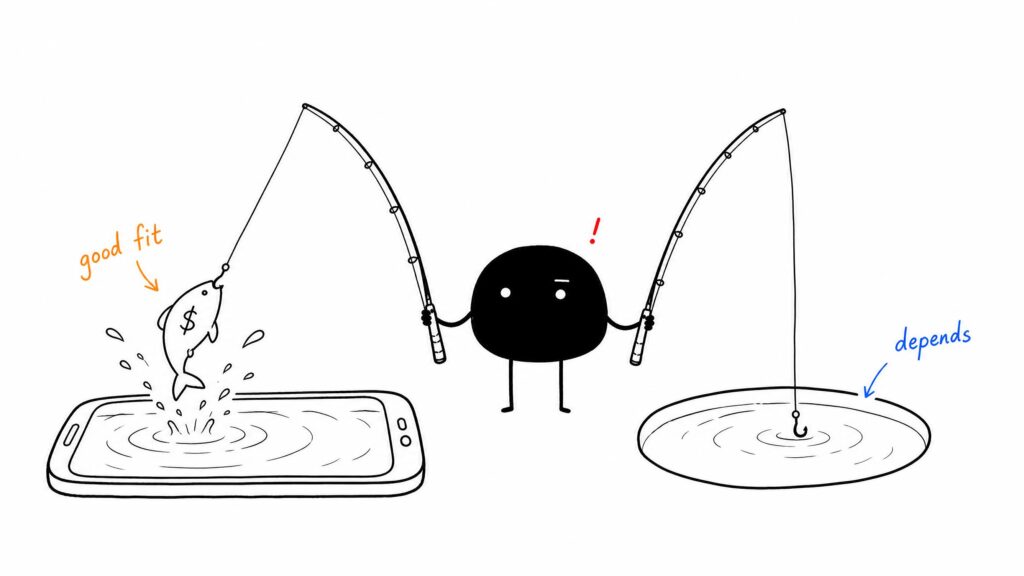
It depends on customer intent. Google ads capture people actively searching for a solution right now. Facebook ads reach people based on interest and behaviour before they are actively searching, which is better suited to creating awareness and demand rather than only capturing existing demand.
Why did my Facebook ads not generate any leads?
The most common causes are weak creative that does not stop the scroll, a landing page mismatched to the ad’s promise, a test budget too small to gather meaningful data, or targeting that is too broad or too narrow for the offer. Most underperforming campaigns have one identifiable, fixable cause.
Wondering if Facebook advertising is the right fit for your business specifically? Get in touch with our team for an honest assessment, not a sales pitch.