“What should we be spending on marketing” is a question most Winnipeg small business owners ask at some point, usually right after a slow quarter or right before a growth push. There is no single right answer, but there is a reasonable framework, and this guide walks through it.
Start With a Percentage of Revenue, Then Adjust
A common industry starting point is 6 to 12 percent of gross revenue for established businesses focused on maintaining and steadily growing their position, and up to 12 to 20 percent for businesses in an aggressive growth phase or a newer business still building initial awareness. These are starting benchmarks, not rules, but they are a far better anchor than picking a number that feels comfortable without any reference point.
A business doing $500,000 in annual revenue in steady-growth mode, for example, might reasonably budget $30,000 to $60,000 a year across all marketing activities, which works out to roughly $2,500 to $5,000 a month. That number then gets split across channels based on what actually reaches your specific customers.
How to Split the Budget Across Channels
SEO and content tends to be the most cost-efficient channel over time because it builds an asset (rankings, traffic) that keeps paying off rather than stopping the moment spending stops, but it is also the slowest to show results, typically 3 to 6 months minimum before meaningful traction.
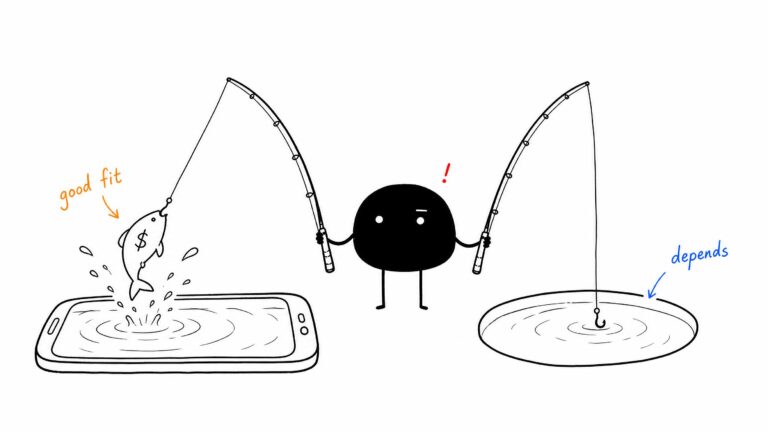
Paid advertising (Facebook, Google Ads) delivers faster, more immediately measurable results, which makes it a good fit for filling short-term gaps or testing new offers, but the results stop the moment the spending stops, unlike SEO.
Website and conversion improvements are often underfunded relative to their impact. A business driving traffic to a slow, confusing, or outdated website is often leaking a meaningful percentage of the leads that channel budget already paid to generate.
Local SEO and Google Business Profile management deserves dedicated budget for any Winnipeg business relying on local customers, since it is one of the more cost-efficient channels available at this market size.
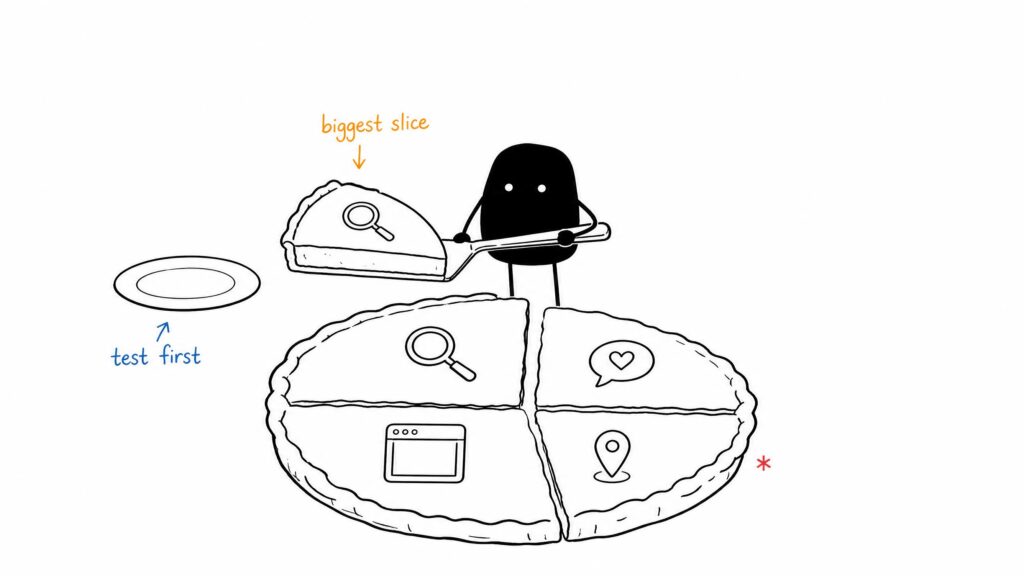
A reasonable starting split for many Winnipeg SMBs looks like 40 percent SEO and content, 30 percent paid advertising, 20 percent website and conversion work, and 10 percent local SEO and profile management, adjusted based on which channels are already working and which need to be built from scratch.
Budgeting by Business Stage
New businesses (under 2 years) should generally weight budget toward faster-feedback channels like paid advertising and local SEO, since there is limited existing traffic or reputation to build on, and faster signal on what is working matters more early on.
Established businesses (2 to 10 years) typically get the best return shifting weight toward SEO and content, since they usually have enough of a track record (reviews, case studies, testimonials) to make content genuinely credible and worth ranking.
Businesses in a growth or expansion phase often need to temporarily increase overall spend across the board rather than reallocating existing budget, since the goal is capturing new market share, not just optimizing an existing budget’s efficiency. This is where a business like Musique Fazh landed, needing a coordinated landing page and digital marketing strategy built together rather than treating the website and the marketing spend as separate problems.
Common Budgeting Mistakes
Spreading too thin across too many channels. A modest budget split six ways rarely moves the needle anywhere. It is usually better to fund two or three channels properly than to underfund six.
Treating marketing as a one-time expense instead of ongoing investment. A single month of spending, especially on SEO, rarely produces meaningful results. Budgeting needs to account for a sustained runway, not a one-off campaign.
Ignoring the website while funding traffic channels. Paying to drive traffic to a page that does not convert is the most common form of wasted marketing spend we see. Conversion-focused website work often has a faster payback period than adding more traffic spend on top of an underperforming page.
No tracking to know what is actually working. Without basic tracking (form submissions, call tracking, conversion data), budget decisions end up based on gut feeling rather than results, which usually means good channels get underfunded and weak ones keep getting renewed out of habit.
A Practical Starting Framework
If you are setting a digital marketing budget for the first time, start with the percentage-of-revenue benchmark above, split it roughly across SEO, paid, website, and local SEO based on your business stage, and commit to a minimum 6-month runway before making major reallocation decisions. Marketing budgets that get reshuffled every month rarely have enough time for any single channel to prove itself. Our Digital Marketing page breaks down how we typically structure this for Winnipeg businesses at different stages.
Frequently Asked Questions
What percentage of revenue should a small business spend on marketing?
A common benchmark is 6 to 12 percent for established, steady-growth businesses and 12 to 20 percent for businesses in an aggressive growth phase or newer businesses still building awareness.
Should I spend more on SEO or paid advertising?
Neither is universally better. SEO builds a long-term asset but takes months to show results. Paid advertising shows results faster but stops the moment spending stops. Most Winnipeg SMBs benefit from a mix of both rather than choosing one exclusively.
How long should I commit to a marketing budget before judging results?
A minimum of 6 months, especially for SEO and content work. Shorter windows rarely allow enough time to separate a genuinely underperforming channel from one that simply needed more runway.
Is a $500 to $1,000 a month marketing budget enough for a small business?
It can be enough for a narrowly focused strategy, like local SEO and Google Business Profile management for a single-location business, but is usually too thin to run multiple channels effectively at once. Better to focus that budget on one or two channels than spread it across many.
What is the biggest marketing budget mistake Winnipeg businesses make?
Underfunding the website while paying for traffic. A well-optimized budget for ads or SEO delivering traffic to a slow, confusing website is spending money to generate visits that never convert.
Want help building a realistic budget for your specific business? Get in touch with our team and we will walk through the numbers with you.