Content marketing is one of the few marketing channels where the work you do today continues to pay dividends months and years from now. A blog post that ranks on page one of Google this year will generate leads next year. Understanding how to build a content strategy — not just publish content — is the difference between a marketing investment and a marketing expense.
What Is Content Marketing?
Content marketing means creating and distributing material that is genuinely useful to your target audience — not promotional material disguised as content. By providing value through education, insight, and answers, you build trust and authority with people who may eventually become clients or customers.
Why Content Marketing Produces Strong ROI
- Businesses that prioritize blogging generate 13x more positive ROI than those that don’t (HubSpot)
- Content marketing costs 62% less than traditional outbound marketing and generates 3x more leads (Demand Metric)
- 91% of B2B marketers use content marketing as part of their strategy (Content Marketing Institute)
The Five Content Types That Drive Results
1. Long-Form Blog Posts
Blog posts remain the highest-ROI content format for service businesses because they directly target search intent. Well-structured long-form content (1,500-3,000 words) ranks more reliably than thin content and signals expertise to both search engines and readers.
2. Case Studies
Case studies are the most persuasive content format for high-consideration purchases. A case study structured as Situation → Challenge → Approach → Outcome converts better than any testimonial or service page copy.
3. Video Content
Video tutorials and expert commentary perform strongly on YouTube (the second-largest search engine) and generate extended time-on-site metrics when embedded on web pages.
4. Email Sequences
Email remains the highest-converting channel for warming leads who are not yet ready to buy. A well-designed sequence moves prospects through awareness → consideration → decision over days or weeks, with no additional ad spend required.
5. FAQs and Topic Clusters
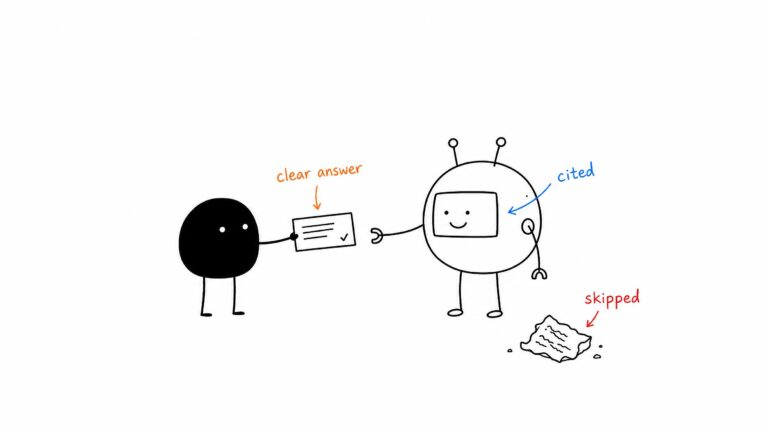
Google’s featured snippets reward content that directly answers specific questions. Building content around the questions your ideal clients are actually asking creates topical authority that elevates all your rankings.
How to Build a Content Strategy That Works
Define the objective first. Every piece of content should have a conversion goal: organic traffic, email subscribers, or moving a lead toward a sales conversation.
Research what your audience is actually searching for. Write for search intent, not for what you think is interesting. Use keyword research tools to confirm search volume behind the topics you plan to cover.
Build a content calendar. One well-researched, optimized post per week outperforms three rushed posts that add no real value.
Optimize every piece for search. Every published piece should include a primary keyword in the title and H1, secondary keywords in H2-H4 headings, a meta description, and internal links to relevant service pages.
Ready to Build a Content Machine?
A content strategy designed around your service areas, your audience’s actual search behaviour, and your conversion goals produces a compounding asset — not a campaign that ends when the budget runs out.
Book a discovery call — we’ll map out exactly what it would take to get you there.