Technical SEO is the foundation that determines whether your website can be found, crawled, and ranked by search engines — regardless of how good your content is. You can publish the most useful article about your services in Winnipeg, but if your site has technical issues preventing Google from indexing it properly, that content will never rank.
What Technical SEO Actually Covers
Technical SEO addresses the underlying infrastructure of your website. Unlike on-page SEO (which focuses on content) and off-page SEO (which focuses on backlinks), technical SEO is about making your website accessible, fast, and interpretable for search engine crawlers.
- Website speed and Core Web Vitals
- Mobile-friendliness
- Crawlability and indexability
- Site architecture and URL structure
- HTTPS / SSL security
- Canonical URL management
- Structured data markup (schema)
- XML sitemaps
Core Web Vitals
Google measures page experience using three Core Web Vitals metrics: Largest Contentful Paint (LCP) — how fast the main content loads (target: under 2.5 seconds); Interaction to Next Paint (INP) — how quickly the page responds to interaction (target: under 200ms); and Cumulative Layout Shift (CLS) — how much the layout shifts as it loads (target: under 0.1).
Mobile-First Indexing
Google uses mobile-first indexing — meaning the mobile version of your site is what Google primarily evaluates for ranking. If your site is slow or broken on a phone, that directly impacts rankings for all devices.
Crawlability
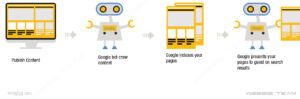
Search engines navigate websites by following links. If important pages are not linked internally, are blocked by your robots.txt file, or return error codes, they will not be indexed. Key requirements: a clean XML sitemap submitted to Google Search Console, a robots.txt that doesn’t block important pages, no orphan pages, and no redirect chains longer than two hops.
HTTPS: The Non-Negotiable

Google confirmed HTTPS as a ranking signal in 2014. A website without SSL — showing a “Not Secure” warning — loses both rankings and user trust. If your site still runs on HTTP, this is the first technical fix before anything else.
Structured Data Markup (Schema)
Schema markup tells Google precisely what your content is — including your business name, address, phone number, services, and reviews. Schema can generate rich results in search: star ratings, FAQ snippets, and breadcrumbs that increase click-through rates. For Winnipeg service businesses, the most important schema types are: LocalBusiness, Organization, Service, and Article for blog posts.
Is Your Website Technically Sound?
Most business websites have at least one significant technical SEO issue suppressing their rankings. A site audit surfaces these before content and link-building investments are made on a broken foundation.
Book a discovery call to talk through what a technical audit would cover for your site.