If you have started looking into search engine optimization for your business, you have probably run into two terms that get used almost interchangeably: SEO and local SEO. They sound like the same thing with an extra word tacked on. They are not, and mixing them up is one of the most common reasons Winnipeg business owners end up paying for the wrong strategy.
Here is the short version. SEO is the umbrella term for getting a website to rank in search results, anywhere, for anyone. Local SEO is a specific subset of SEO built to get your business found by people searching near you, right now, ready to visit or call. If you run a clinic, a restaurant, a law office, a home service company, or almost any business that depends on customers from a specific city or neighbourhood, local SEO is where your budget should go first. If you sell nationally or online with no physical service area, broader SEO matters more.
This guide breaks down exactly what separates the two, how Google treats them differently, and how to figure out which one your business actually needs.
What SEO Actually Means
SEO covers everything that helps a website rank in Google’s regular search results. That includes technical work (site speed, mobile usability, clean code), content work (blog posts, service pages, keyword targeting), and authority building (backlinks from other trustworthy websites). The goal is visibility for a topic or keyword, full stop, without any geographic filter attached.
A national e-commerce store selling custom phone cases across Canada cares about SEO. A software company selling to businesses anywhere in North America cares about SEO. Their customers do not care where the company’s office is, so ranking for “custom phone cases” or “project management software for small teams” is the whole game.
What Local SEO Actually Means
Local SEO is SEO with a location filter built in. It targets searches that already carry local intent, either because the searcher typed a city name (“dentist Winnipeg”) or because Google inferred location from the device itself (“dentist near me”). Local SEO also includes an entirely separate ranking system most businesses do not think about until it is explained to them: the Google Map Pack, the three-listing block with a map that shows up above the regular organic results for local searches.
Ranking in the Map Pack depends on different signals than regular SEO. Your Google Business Profile matters more here than almost anything else, along with review count and quality, how consistent your business name, address, and phone number are across the web (called NAP consistency), and how close the searcher is to your location. A perfectly optimized website with zero Google Business Profile activity will struggle to appear in the Map Pack no matter how good the content is.
This is the piece that trips people up. Local SEO is not “regular SEO but for a small city.” It is a genuinely different ranking system running in parallel, and it needs its own strategy, not a smaller version of a national one.
The Real Differences, Side by Side
Search intent. SEO targets broad or informational searches. Local SEO targets “near me” and “in [city]” searches from people who are close to making a decision.
Where you show up. SEO competes for the ten blue links. Local SEO competes for those links plus the Map Pack, which for many local searches gets more clicks than the organic results below it.
What moves the needle. SEO rewards content depth, site authority, and backlinks. Local SEO rewards Google Business Profile completeness, review velocity, local citations, and proximity.
Who you are competing against. SEO puts you up against every website in the country targeting that keyword. Local SEO narrows the field to businesses physically operating in your service area, which is a much smaller, more winnable pool.
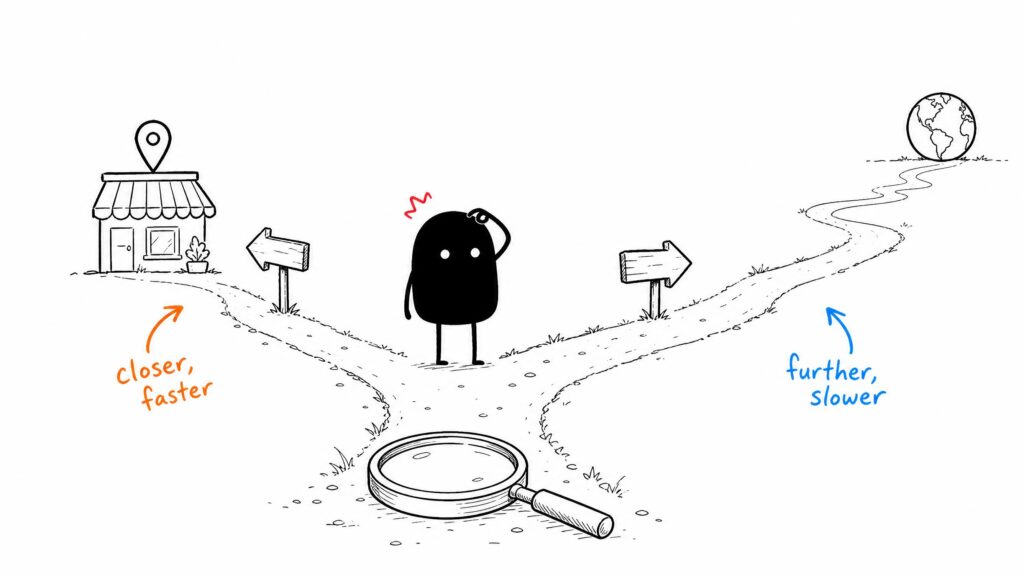
Timeline to results. Local SEO tends to move faster because the competition is smaller and more of the ranking signals (reviews, GBP activity, citations) are things you can act on directly this month.
Which One Does Your Business Actually Need?
Ask yourself one question: does a customer need to be near you to buy from you? If someone has to walk into your location, call you for a service call, or book an appointment at your address, local SEO should be the priority. That covers most trades, clinics, restaurants, retail, law firms, salons, and home service businesses in and around Winnipeg.
If your product ships anywhere or your service is delivered entirely online with no location requirement, broader SEO carries more weight, though local SEO can still help if you want to be found as a “Winnipeg-based” provider by customers who value working with a local team.
Most businesses we work with in Winnipeg actually need both, just not in equal amounts. A strong local SEO foundation (Google Business Profile, reviews, citations, a location-aware service page) captures the ready-to-buy searches happening right now, while broader SEO content builds long-term authority that compounds over years. We walk through exactly how to prioritize that split on our search engine optimization page, and if local visibility specifically is what you are trying to solve, our local SEO and Map Pack guide breaks down the ranking factors in more detail.
A Quick Way to Check Where You Stand Today
Open an incognito browser window and search for your main service plus “Winnipeg” (for example, “roofing company Winnipeg”). Look at three things: are you in the Map Pack at all, is your Google Business Profile listing complete with recent reviews, and does your website’s homepage or a service page actually mention Winnipeg by name in the heading or first paragraph. If any of those three are missing, that is your starting point, not a full rebuild.
Frequently Asked Questions
Is local SEO more affordable than regular SEO?
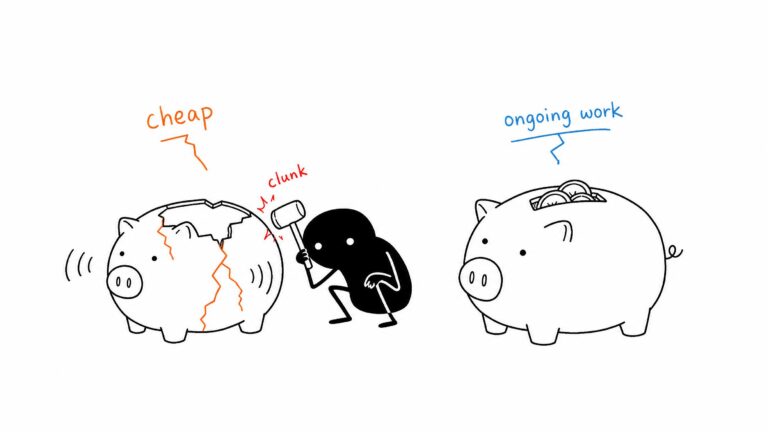
Generally yes, at least to start. Local SEO relies heavily on things you can act on directly, like completing your Google Business Profile and collecting reviews, which cost time more than money. Broader SEO usually requires sustained content production and link building, which takes longer to show results and typically costs more over time.
Can a business rank in the Map Pack without a physical storefront?
Yes, if it is a legitimate service-area business (like a plumber or landscaper who travels to customers) rather than a storefront. Google has specific guidelines for service-area businesses, and the profile needs to be set up correctly to reflect that, which is a common mistake we see when reviewing new client accounts.
Do I need a separate website for local SEO?
No, and building a second website or a set of near-duplicate location pages targeting the same service is actually a risk, not a benefit. Google treats that pattern as a spam signal in some cases. The better approach is one strong website with clear local signals built into the existing pages.
How long does local SEO take to show results?
Most Winnipeg businesses start seeing movement in the Map Pack within 4 to 8 weeks once Google Business Profile optimization, review generation, and citation cleanup are underway, though competitive categories can take longer. Broader organic rankings typically take 3 to 6 months minimum.
Should I focus on SEO or local SEO first if I can only do one?
If your business depends on local customers, start with local SEO. It is faster to move, cheaper to start, and captures people who are already close to buying. Broader SEO is worth layering in once the local foundation is solid.
Not sure which one your business needs, or want a second opinion on where you currently stand? Get in touch with our team and we will walk through it with you, no obligation.