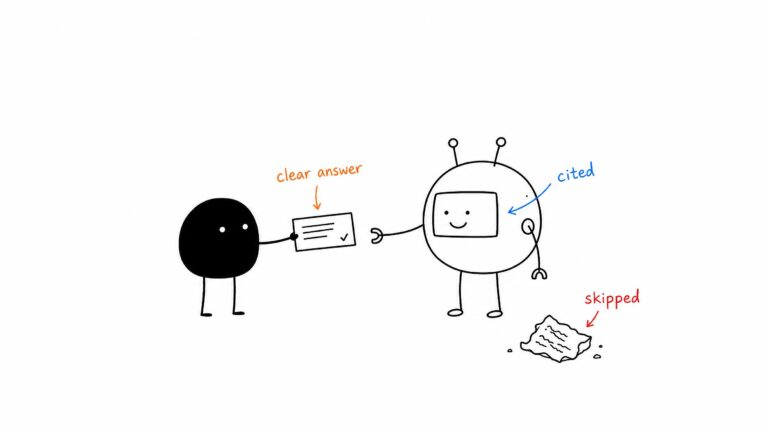
Most press releases never get covered by anyone. Not because the news wasn’t worth covering, but because the release itself was written like an ad instead of like news, and journalists (and increasingly, the algorithms and AI tools that also scan press releases for genuinely newsworthy content) can tell the difference immediately.
Here is how to write and distribute a press release that has a real shot at coverage, not just a listing on a distribution site nobody reads.
Start With a Genuine News Hook
The first question to ask honestly is whether this is actually news, or just an announcement dressed up as news. A new product launch, a significant milestone (an anniversary, a major expansion, a notable award), a meaningful partnership, or original research or data your business has gathered are all genuine news hooks. “We updated our website” or “we are proud to announce our commitment to excellence” are not, no matter how the release is worded.
If you are struggling to articulate why a stranger who does not already care about your business would care about this news, that is a sign the hook needs to be sharpened, or the story needs a different angle, before writing begins.
Structure It Like News, Not Like Marketing Copy
A press release that reads like an ad gets treated like an ad, meaning ignored. The standard structure exists for a reason: a headline that states the news plainly, a strong opening paragraph covering who, what, when, where, and why it matters, supporting details and quotes in the following paragraphs, and boilerplate company information at the end, not the beginning.
Avoid superlatives without evidence (“the best,” “revolutionary,” “industry-leading”) unless you can immediately back them up with a specific fact. Journalists and editors are trained to skip past unsupported claims, and increasingly so are the AI tools now used to scan and summarize incoming press releases.
Write a Real Quote, Not a Marketing Slogan
Every press release should include at least one quote from someone at the company, and it should sound like something an actual person would say out loud, not like a tagline. “We’re thrilled to bring this innovative solution to market” is the kind of quote that gets cut in editing, if the release gets read at all. A quote that gives real context, a specific reason behind the decision, or a genuine perspective on why this matters is far more likely to survive into published coverage.
Make It Easy for a Journalist to Say Yes
Include everything a journalist would need without having to ask: contact information for follow-up questions, high-resolution images ready to use, and any relevant data or documentation that supports the story. A release that requires back-and-forth just to get a usable photo is a release that often gets set aside in favour of an easier story.
Choose Distribution Based on Who Actually Needs to See It
National wire distribution services can be worth it for genuinely national news, but for most Winnipeg and Manitoba small businesses, a more targeted distribution approach, direct outreach to local business press, industry-specific trade publications, and relevant local journalists, tends to produce better results than paying for broad national distribution that mostly reaches people with no reason to care.
Building even a small, genuine list of local journalists and editors who cover your industry, and understanding what they have actually covered before, produces far better response rates than a wide, impersonal blast.
Timing and Follow-Up Matter More Than People Expect
Send press releases with enough lead time for a journalist’s actual publishing schedule, generally several days to a week ahead for most local outlets, and avoid Fridays and the days immediately before a long weekend, when a release is most likely to get buried. A single, polite follow-up a few days after the initial send, not multiple repeated emails, is appropriate and often appreciated rather than seen as pushy.
What Happens After Coverage
Coverage earned through a press release becomes reusable content well beyond the initial hit: it can be linked from your website, referenced in future press releases as evidence of credibility, and shared through your own channels. It also, done consistently over time, builds a real backlink profile and brand mention history that benefits SEO in a way paid advertising never does. Our Press Release page covers how we approach this for Winnipeg businesses, from identifying a genuine news hook through writing, distribution, and follow-up.
Frequently Asked Questions
What makes a press release newsworthy versus just an announcement?
Genuine newsworthiness usually comes from something new, notable, or measurable: a launch, a milestone, a partnership, original data, or a meaningful change. If the honest answer to “why would a stranger care” is unclear, the story needs a sharper angle before writing.
Should I pay for national press release distribution?
Only if the news genuinely has national relevance. For most local Winnipeg and Manitoba businesses, targeted outreach to local and industry-specific journalists produces better coverage results than broad, impersonal national distribution.
How long should a press release be?
Generally 400 to 600 words. Long enough to cover the who, what, when, where, and why with a supporting quote and boilerplate, short enough that a busy journalist can scan it quickly and understand the story immediately.
Do press releases actually help SEO?
Coverage earned from a press release can generate real backlinks and brand mentions, which do support SEO over time, particularly for building topical authority and brand recognition. A press release itself sitting only on a distribution site provides limited direct SEO value on its own.
How often should a small business send press releases?
Only when there is genuine news, not on a fixed schedule. Sending releases without a real hook trains journalists and editors to ignore future submissions from that business, which makes it harder to get coverage when there is something genuinely worth covering.
Have news worth sharing but not sure how to approach it? Get in touch with our team and we will help you figure out the right angle and audience.